
Flexible Energy Forum Agenda:
#DTECH27-PLMA-SECC
Monday, March 1
Diamond Sponsor

JOINT SESSION |


Opening Session | Room TBD
9:00 - 9:15 am
Welcome & Opening Remarks from PLMA and SECC

Cynthia Hunt Jaehne
PLMA Executive Director

Nathan Shannon
President & CEO
Smart Energy Consumer Collaborative (SECC)
9:15 - 10:00 am
JOINT |
Powering Grid Flexibility in the Affordability Era
In this opening plenary session, we will hear from several Southeastern utilities on how they are navigating challenges from grid reliability to energy affordability. More details to come as speakers are confirmed.
10:00 - 10:15 am
JOINT PANEL |
2027 Best Practices Awards Presentation
Join us as we recognize the recipients of SECC’s 2027 Best Practices Awards, honoring outstanding utility programs in Consumer Education, Small Business Engagement, Smart Energy Innovation, Consumer Engagement and Energy Equity. Following the morning plenary, representatives from each winning utility will be recognized on stage and invited to share brief remarks on the strategies and successes behind their award-winning initiatives.
Nathan Shannon
President & CEO
Smart Energy Consumer Collaborative (SECC)
Leigh Winterbottom
ICF
10:15 - 10:45 am
JOINT REFRESHMENT BREAK |
Room TBD
Sponsored by
10:45 - 11:30 AM
Session 1 | Room TBD
Deepening Energy Engagement Through Apps and Devices Customers Already Trust
While utilities focus on engaging customers, influencing energy use and supporting affordability, asking customers to adopt another app or digital channel can create friction. As part of their multi-faceted engagement strategy, Southern California Edison took a different approach: rather than require customers to adopt something new, they brought trusted energy data into a platform millions of customers already use every day, Apple Home. The payoff is a lower-friction path to energy literacy. Customers can understand their usage and rate plan without downloading anything new, learning a new interface, or changing behavior just to get informed. For SCE, that creates the potential for broader reach and deeper engagement, and a model other utilities can replicate by delivering insights through the platforms customers already trust. This session will cover why SCE chose to leverage Apple’s Home app, and what it signals for the future of utility-customer engagement.

Chanel Parson
Southern California Edison

Scott Engstrom
GridX
SESSION 2A & 2B | Room TBD
Making Grid Flexibility Operational: A Structured Coordination Design Method to Plan for Dispatchable and Structural Flexibility
As grid needs become more dynamic, identifying flexible resources to deliver reliable value solves only a part of the enablement problem. A more complex challenge is coordinating the resources across customers, aggregators, and grid operators. This session presents how ORNL’s DOE-funded coordination design method will allow utilities interested in leveraging flexible resources to connect a grid need to coordination mechanisms, identify relevant actors and information exchange sequences that use standard definitions, and export standardized data profiles. This method accelerates a flexibility program from opportunity to an operational reality. It reduces the ambiguity between program design and technical implementation while making the process repeatable and transparent. Using a large load or aggregated resource portfolio as a use-case, the presentation will explore how dispatchable and structural flexibility options can be specified for engineering studies. The audience will see how the same resources can produce different grid outcomes depending on the coordination specification.

Aditya Sundararajan
Oak Ridge National Laboratory
Flexible Resources: Real-World Utility Experiences with Virtual Power Plants
Orange and Rockland Utilities partnered with Sunrun to operate the first behind-the-meter battery storage virtual power plant implemented by a utility in New York State. Through REV funding, the ISBM (Innovative Storage Business Model) virtual power plant project has installed 345 residential solar-plus-storage systems that aggregate to approximately 1.6 MW / 3.2 MWh in flexible resources. The VPP can be activated by O&R during times of peak demand to assist our electric distribution system. The ISBM project functions with a customer signing a lease agreement with Sunrun for the solar system, O&R subsidizes the cost of the battery and gives the customer an option for a free battery. In return, O&R receives primary dispatch rights to the battery for 10 years. The customer receives credits for excess solar and is able to use the battery as backup for their home during an outage.

Christian Woods
Orange & Rockland Utilities

Ralph Devitto
Orange & Rockland Utilities
11:30 - 12:15 PM
Session 3 | Room TBD
Planning Meets Operations: Valuing DERs for Distribution Capacity Deferral
Utilities and regulators have a range of options to mitigate upward pressure on rates from distribution system spending. One potential medium-term option is to evaluate and implement applicable, non-traditional solutions to distribution capacity expansion. The growth in DER adoption and the buildout of utility-led VPPs, comprising both BTM and FTM DERs and grid-aware DERMS, present a unique opportunity for utilities to apply non-traditional solutions to traditional distribution capacity expansion at a lower cost to all customers. This presentation will delve into the potential for the localized dispatch of distributed energy resources – through VPPs and Edge DERMS – to provide distribution grid services. Focused on the opportunity to defer distribution capacity expansion costs, the speakers will share insights from a forthcoming SEPA white paper that analyzes existing frameworks for the valuation of localized DERs, recent utility valuation examples, and the inextricable link between distribution system planning and operations.

Lakin Garth
Smart Electric Power Alliance

Jason Delaney
Arizona Public Service
SESSION 4 | Room TBD
Data Center Investment in VPPs: A Framework for Implementation
Data centers are driving rapid load growth while utilities face pressure to connect new customers quickly without creating unnecessary costs or reliability risks for existing customers. Could investment in distributed flexibility help square that circle? This session will bring together utility, regulatory, customer, and research perspectives to explore emerging models through which data centers could fund incremental virtual power plant capacity and, where that capacity addresses a real system need, potentially receive faster access to power. The discussion will draw on a forthcoming white paper jointly developed by RMI, The Brattle Group, and Ad Hoc Group. Panelists will tackle three implementation questions: What makes VPP capacity genuinely additional? How should it be accredited and verified? And when does it address a capacity or grid constraint well enough to support a “speed-to-power” incentive?

Moderator Annie Gilleo
Ad Hoc Group

Louise White
Commonwealth of Virginia
Lon Huber
Xcel Energy

Ellen Zuckerman
Google
12:15 - 1:15 pm
JOINT LUNCH |
Room TBD
Sponsored by

1:15 - 2:00 PM
Session 5 | Room TBD
Enabling the Integrated Grid: From Latent DER Discovery to Orchestration Planning
This session centers on the Integrated Grid: using controllable devices to shape load, enhance infrastructure utilization, and improve affordability. The US grid is becoming increasingly complex, constrained, and expensive. Proliferation of DERs is upending traditional load and operational profiles, while rising demand strains existing infrastructure and compels equipment upgrades. Addressing these challenges requires a holistic, systems-level approach. With Southern Company and Xcel Energy, we will walk through the analytical steps that make the Integrated Grid operational: identifying what is on the grid (unregistered solar, batteries, EV charging, and other flexible loads); 8760 headroom modeling to show which circuits can absorb more load or DER and where operating envelopes create room without hardware upgrades; identifying where new load can connect quickly across transmission and distribution; and using dynamic operating envelopes to dispatch what is already there. The outcome: better infrastructure utilization, deferred capital spend, and downward pressure on customer rates.

Moderator Hilary Polis
The Ad Hoc Group

Justin Diamond
Gridsight
Robin Lanier
Georgia Power

Zach Pollack
Xcel Energy
SESSION 6A & 6B | Room TBD
What Happens When Customers See the Peak? Results from a 300,000-Customer Trial
What if a monthly energy report showed customers they use electricity, not just how much? A utility tried this with more than 300,000 households on time-of-use rates. Among customers who already received reports, reports with peak-hour comparisons increased the average on-peak reduction by 50%, compared with standard time-of-use reports. For customers new to reports, both versions reduced peak use by about the same amount. A customer satisfaction survey also found that recipients of the peak-focused reports were more likely to say the reports improved their satisfaction with the utility. This session will show what changed in the reports, what worked, what did not, and how ongoing customer feedback can complement event-based demand response.

Pauline Marcou
Oracle Utilities Opower
From Constraint to Growth: Turning the Distribution Grid into a Platform for What Comes Next
The distribution grid is increasingly becoming more than a delivery system; it is becoming a platform for growth. This session will explore how strategically deployed distributed energy resources can help utilities unlock more value from the distribution system by addressing local constraints, improving utilization of existing infrastructure, and adding capacity closer to where demand is emerging. It will examine how utility-led, aggregated, and customer-sited models can each play a role in this shift, and how distributed resources can increasingly be treated as part of the infrastructure utilities use to meet system capacity needs. The discussion will focus on what this evolution means for utility planning, reliability, affordability, and the ability to support continued grid and economic growth.

Pier LaFarge
Sparkfund
2:00 - 2:45 PM
SESSION 7 | Room TBD
EVs: The New Frontier to Grid Resiliency and a More Affordable Future
Electric vehicles (EVs) are no longer just about transportation. They encompass an entire energy ecosystem that has the opportunity to bring down electricity costs for consumers, support more resilient power grids for utilities and regulators, and contribute to a more sustainable future for society at large. Virtual power plants (VPPs) with EV technology today can help utilities better utilize existing infrastructure longer and lower costs, support energy stability, and create safer, more convenient, and more entertaining customer experiences like never before. Bidirectional power from EVs can power homes, worksites, and even give power back to the grid in times of need. This panel discussion will focus on tough lessons learned and real-world success stories from Ford and PG&E around EV VPPs. Join us to see how automakers, utilities, and regulators are working together to provide customers with connected energy solutions that were only theoretical just a few years ago.
Michelle Bogen
Ford Motor Company
David Almeida
Pacific Gas & Electric
SESSION 8 | Room TBD
Rethinking Energy Affordability
Energy affordability is often treated as a bill problem, but it is just as much an income problem. In the Southeast, some of the lowest electricity rates in the nation coincide with some of the highest energy burdens, a signal that cost alone cannot explain, or solve, the challenge. Addressing affordability means looking at household income alongside energy costs, at how utility investment, funding, and workforce development intersect to support LMI/ALICE households. There is no shortage of approaches that ease energy burden. Weatherization lowers bills by lowering consumption. Workforce training pairs upgrades with career pathways in the energy trades. LIHEAP, demand response, and utility discount programs offset burden. Income based rates and on-bill financing remove upfront capital barriers. This panel brings together perspectives on these programs and consumer research on how LMI/ALICE households engage with them, and what that means for program design, partnership, and funding strategy.
Moderator Rebeca R. Barrios-Hurst
MEEA

John Silkey
Southeast Energy Efficiency Alliance (SEEA)
Kristofor Anderson
Georgia Environmental Finance Authority (GEFA)
2:45 - 3:15 PM
JOINT REFRESHMENT BREAK |
Room TBD
Sponsored by
3:15 - 4:00 PM
SESSION 9 | Room TBD
No Home Left Behind: Built-In Flexibility for the Masses
Despite 80% of customers saying they want energy-saving solutions, enrollment has hovered near 10% for decades. Built-in Flexibility breaks that ceiling by embedding flexibility as a default feature, with no enrollment required––maintaining customer control. Every eligible home added expands the number of dispatchable MWs while easing affordability pressure. This session brings utilities, OEMs, and Uplight together to discuss the results of recent opt-out programs—and the dispatch, communications, and orchestration required to make this portfolio-scale flexibility.

Kari Gehrke
Alliant Energy
Natalie Gray
Evergy

Sophie Parker
Uplight
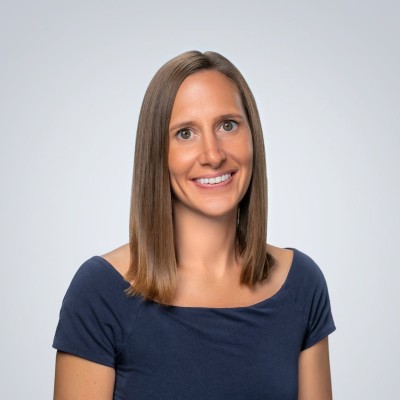
Tamara Dzubay
ecobee
SESSION 10 | Room TBD
Flexibility-Adjusted Headroom: Modeling the Value of Flexibility with Digital Twins at SMECO
Utilities planning for electrification need to know how much capacity remains on each transformer and feeder, and how much flexibility could add. Headroom estimates typically treat load as fixed, while flexibility is usually valued as a portfolio average with no tie to where it sits on the grid. This session examines the value of modeling flexibility with digital twins at Southern Maryland Electric Cooperative (SMECO), as part of a study under the DOE American-Made Digitizing Utilities Prize. Jason Trager of Plentiful.ai and Ryan Edge of SMECO will look at how digital twins can automatically generate headroom that includes the added value of grid flexibility, based on a flexibility plan for each building. The approach fuses data the utility already holds, such as AMI and transformer records, with building characteristics and weather. Attendees will see the method and how SMECO is scoping its use.
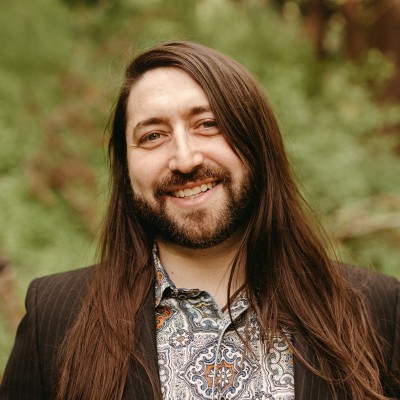
Jason Trager
Plentiful.ai

Ryan Edge
Southern Maryland Electric Cooperative (SMECO)
4:00 - 4:45 PM
SESSION 11 | Room TBD
Delivering a ~10 MW Non-Wires Solution in 5 Months: A Scalable Blueprint from EPE & Base Power
Residential load growth pushed portions of El Paso Electric’s distribution system toward substation and feeder overload, with traditional infrastructure upgrades projected to take years and require significant capital investment. Instead, EPE partnered with Base Power to deploy a distributed fleet of residential batteries across the constrained area, delivering ~10 MW of fully dispatchable capacity in 5 months, without waiting for traditional grid upgrades. In this session, Liz from El Paso Electric and Tim from Base Power walk through how the program was designed, launched, and scaled at speed, including: Designing a compelling customer offering to enable rapid enrollment; Implementing a front-of-meter configuration to enable utility ownership and direct control of fleet dispatch; Executing deployment at scale across hundreds of homes; Streamlining interconnection and operational integration. Speakers will share real-world performance results from the 2026 summer peak, including daily dispatch operations, system impact, and how the battery fleet performed during critical grid events.
Liz Aragón
El Paso Electric

Tim Pianta
Base Power
SESSION 12 | Room TBD
Orchestration, Not Just Capacity: A VPP Framework for Data Center Load Growth
Data center load growth is forcing utilities to find capacity fast, and the default response, signing up more resources, misses the harder problem: coordinating those resources into something that behaves like a dispatchable resource at scale. This session presents a framework for using a DERMS to orchestrate multiple resource types (batteries, thermostats, C&I loads, on-site storage) against a single large load event, rather than managing each resource pool separately. Drawing on EnergyHub’s dynamic load shaping (DLS) deployment data, we’ll show how current VPP performance can be orchestrated to incorporate increasing system complexity from data center load growth, and share an early nodal analysis testing orchestration at the substation level. The session distinguishes what’s possible today from what’s still forward-looking, and offers actionable recommendations and a practical dos/don’ts list for evaluating orchestration versus simply adding resources.

Paul Hines
EnergyHub
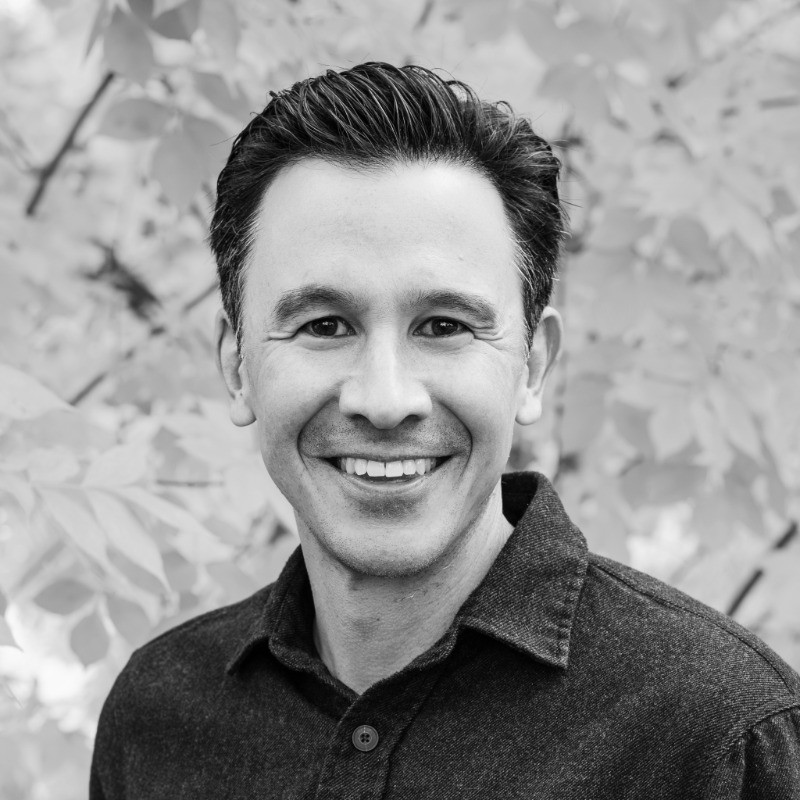
Mark Gately
Mercury Computing
4:45 - 5:00 pm
Wrap-up & Closing Remarks
5:00 - 6:30 PM
JOINT RECEPTION |
Room TBD
Networking Reception Sponsored by
