
Registration Desk / Lanyard sponsor

Data Center Sponsor

12:00 - 1:00 pm
SHARED Lunch
Combined Opening Plenary Session for EV and Data Centers | Salon 4
Sponsored by

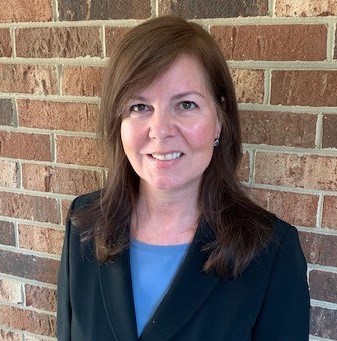
Co-Chair
Allison Hamilton
National Rural Electric Cooperative Association

Co-Chair
Ross Malme
Malme Consulting
1:00 - 1:15 pm
Welcome and Opening Remarks
1:15 - 2:00 pm
Flexible Load at Scale: What EVs Taught Us and What Data Centers Will Challenge
Electric vehicles (EVs) have been the proving ground for flexible load over the past five years. Utilities, regulators, and solution providers have piloted and scaled managed charging programs, tested time-varying rates, and begun integrating flexibility into planning processes.
At the same time, a new wave of load growth is emerging from large data centers, with individual facilities often exceeding 100 MW and requiring near-perfect reliability.
This session brings these two worlds together to answer a critical question: What lessons from EV flexibility actually translate to large-scale, mission-critical loads like data centers, and where do entirely new approaches need to be developed?

Garrett Fitzgerald
SEPA

Jessica Lin
EPRI

Jed Cohen
Salt River Project
2:00 - 2:30 pm
SHARED Refreshment Break
2:30 - 3:15 pm
EV BreakOut 1 | Salon 5-7

Co-Chair
Katie Parkinson
Pipes and Wires Consulting

Co-Chair
Meghan Jennings
Rappahannock Electric Co-op
V2X In the trenches: Real World Joys and Frustrations of Residential V2X Deployments
Bidirectional charging promises to turn EVs into flexible grid resources—but what does it actually take to make V2X work outside of a demonstration?
Drawing on lessons from the MassCEC V2X Pilot Project Program and other real-world deployments, this practitioner-led panel brings together perspectives from Resource Innovations, The Mobility House / PowerFlex, Kia, National Grid, and ChargeScape to separate V2X potential from field reality.
Panelists will share what they have learned deploying residential and light-duty bidirectional charging, including the equipment and cost required to get a site operational, the realities of utility interconnection, and the technical and operational challenges that emerge when vehicles, chargers, OEMs, utilities, and software platforms all have to work together.
Grounded in what worked, what didn’t, and what surprised the teams implementing these projects, this session will offer a candid reality check on where V2X stands today—and what still needs to change to move from pilots to repeatable, scalable utility programs.

David Roman Ubeda
National Grid

Sally Griffith
Resource Innovations

Matthew Mills
PowerFlex (previously The Mobility House)

Alex Pawlowski
Kia

Michael Sojka
ChargeScape
EV BreakOut 2 | Studio E

Co-Chair
Gary Smith
Sagewell

Co-Chair
Ryan Bird
Energy Solutions
The Role of Rates in EV Load management: Lessons from Real-World Deployments
TOU tariffs or dynamic “hourly flex” pilots reflect diverse approaches to leveraging rates for EV load management. Even with different design goals, rate structures remain at the heart of utility-level EV charging load strategies. Both traditional and advanced rate designs are integral to effective EV load management, but what’s the right mixture of each and what needs to be true for successful scale and grid impact?
This panel features those leading the charge on leveraging rates. It includes real world case studies on TOU and real-time pricing, plus you’ll learn how they are shaping the next generation of EV load management practices which will be informed by emerging field experience and pilot deployments in California.

Cameron Seher
Pacific Gas & Electric

Eva Molnar
Southern California Edison

Stephanie Leach
ev.energy
EV BreakOut 3 | Studio B

Chair
Jesse Hitchcock
E Source
Managed Charging Opportunity for Medium and Heavy-Duty Fleets
Join us as we dive into the evaluation of $700M in charging infrastructure spending made by four California utilities: SCE, PG&E, SDG&E, and Liberty, with most of that funding targeted at medium-to-heavy-duty fleets.
The fifth year of this program evaluation focused on learning why only 20% of 300+ participating fleets manage their charging. To find out, our presenters conducted 40+ fleet manager interviews and site visits and will share what they learned. Reasons included lack of awareness as well as barriers associated with charging hardware, software, and vendor support.

Jason Greenblatt
CLEAResult Energetics
Utility TBD
3:15 - 4:00 pm
EV BreakOut 2 | Studio E
How Locational EV Charging Optimization Supports Affordability
As EV adoption accelerates alongside data center load, utilities face mounting pressure to integrate large new loads while maximizing grid reliability, affordability, and decarbonization. EV charging poses a major challenge as well as a promising opportunity at the distribution level, and the difference between these two outcomes depends on when and how EVs are charged.
Traditional solutions like time-of-use rates alone can create further issues. For example, Xcel Energy identified a ~45% increase in feeder peak charging load as EVs charged simultaneously during off-peak periods. Grid-aware managed charging offers a fundamentally different approach.
In this panel, BGE and Xcel Energy will share localized grid-aware managed charging design and results from their scaled programs with WeaveGrid. Panelists will explain grid-aware distribution optimization, the customer experience, real grid benefits at scale, cost-effectiveness analysis, and implications for distribution planning. We’ll also hear firsthand from panelists about their lessons learned from deployment, providing real-world insights and concrete takeaways.

Nikhila Datta
BGE

Lucas Roach
Xcel Energy

Jessi Gallu
WeaveGrid
EV BreakOut 3 | Studio B
Running a Utility-Led Commercial Managed-Charging Program – What the Data Actually Looks Like
Utilities are increasingly relying on managed charging to integrate growing commercial EV loads while meeting aggressive policy targets and avoiding costly distribution upgrades. However, the grid value of managed charging depends heavily on the availability, quality, and alignment of charging data across EVSEs, network service providers, and site hosts.
Join our presenters as they share lessons learned from operating one of the country’s first utility-led commercial managed charging programs. Drawing from real program experience, it examines the charging data that utilities can reliably access today, where data gaps and delays emerge, and how these challenges directly affect load management, program efficacy evaluation, and grid planning.
The session will highlight the tradeoffs utilities face between ideal data and what is feasible in practice, and how program design and operations can adapt to still deliver meaningful grid benefits. Our discussion will focus on actionable insights for utilities, vendors, and planners designing scalable commercial managed charging programs.

Verónica Zuluaga
Con Edison
4:00 - 4:30 pm
SHARED Refreshment Break
EV Day 1 Closing Session | Salon 4

Co-Chair
Stacy Noblet
ICF

Co-Chair
Mathias Bell
WeaveGrid
4:30 - 5:15 PM
Exploring Approaches to Implementation and the Operational Realities
EVs introduce unique load management challenges, from clustering on neighborhood transformers to critical, mobility-first customer experiences. Addressing these challenges and realizing the full potential of transportation electrification requires thoughtful approaches and partnerships.
Join utility and automaker representatives to explore how to unlock next-generation solutions to serve growing EV loads without triggering massive infrastructure costs. The panel will discuss real-world lessons and what it takes to build secure integrations, unlock advanced functionality like distribution-level optimization and V2X, and leverage opportunities to scale managed charging programs that support reliability and affordability for all customers.

Lindsay Toth
Xcel Energy
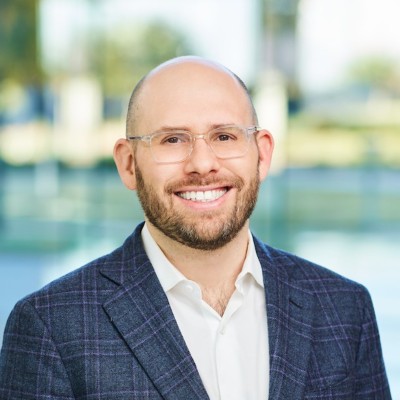
Max Parness
Toyota Motors North America

Lynn Ames
GM
5:15 - 5:45 PM
Technology Advancement Roundtable | Salon 4

Moderator
Jenny Roehm
Schneider Electric
Participants




6:00 - 8:00 PM
Dinner Reception
Sponsored by

7:00 - 8:00 am
SHARED Breakfast
EV Day 2 Opening Session | Salon 4

Co-Chair
Kipling Haviland-Hack
EnergyHub

Co-Chair
Divesh Gupta
ev.energy
8:00 - 9:00 AM
Customer Experience – The Key to Success
Scaling EV programs depends on making participation effortless for customers. This session brings together automakers and utilities to share how they are embedding program enrollment into the ownership experience through OEM apps, dealership channels, and coordinated outreach across DER programs. Panelists will discuss what’s working to drive enrollment, increase ongoing participation, and align incentives across OEMs and utilities so that EV programs deliver measurable grid value without adding friction for customers.

Nav Mand
Volkswagen

Alex Tripi
Volvo
9:00 - 9:30 am
SHARED Refreshment Break
9:30 - 10:15 AM
EV Break Out 4 | Salon 5-7

Co-Chair
Derek Kirchner
TRC Companies

Co-Chair
Corey Wheat
Copeland
Xcel Energy’s Strategy for Optimizing the Value of Managed Charging
In Fall 2025, Xcel Energy initiated a Managed Charging Study to evaluate the present and future value of control pathways (active, passive, and unmanaged) and benefit streams (bulk system versus distribution). Led by the Xcel EV strategy team, the study integrated detailed simulation modeling from T&D planning to estimate optimal enrollment levels as EV adoption scales, with the goal of maximizing avoided system costs and ratepayer benefit.
E Source contributed market insights through a survey of 1,000 EV owners identified via AMI-based disaggregation, capturing customer preferences, behavioral variability, and willingness to enroll at different incentive levels. Currently the industry is focused on answering the binary question, is managed charging cost-effective? This study advances the conversation by identifying where, when, and how managed charging becomes cost-effective with a framework for assessing the relative value of different control strategies and optimization objectives using real world grid, program, and driver data.
Lucas Roach
Xcel Energy

Tami Buhr
E Source
EV Break Out 5 | Studio E

Chair
Dave Alspector
Tierra Resource Consultants
Shaped by Demand: Exploring Commercial EV Load Management Feasibility & Insights for Planning
There is growing interest in developing utility offerings for commercial and fleet managed charging but first it is important to understand where, when, and how these customers charge, their willingness to participate, and how this varies by segment.
Join us to explore the results of two timely studies. The first was completed by E Source and Oncor. The targeting phase of the study included a clustering analysis of Oncor’s customer charging loads to identify and characterize the EV charging patterns at 85 sites and understand variations in charging behavior across customer segments. Our presenters will share their results as well as targeted load management strategies, providing a helpful framework for new commercial and fleet load management offerings.
The second study presents the findings of a decade-long dataset with over 200,000 charging sessions collected across eight federal work sites. Key findings reveal the charging behavior of different user groups and will provide actionable insights into workplace charging as manageable load that can provide grid support for peaks and system stress, as well as enabling flexibility.

Prabhat Gautam
E Source

Kang-Ching Jean Chu
Idaho National Laboratory
10:15 - 11:00 am
EV Break Out 4 | Salon 5-7
Turning EV Charging Data into Action: Preparing Cooperatives for Managed Electrification
As EV adoption accelerates, electric cooperatives face growing challenges in load management, infrastructure deployment, and system planning. Join us to learn how REC uses real-world data—including insights from a three-year EV pilot program—to prepare for increasing electrification across residential, public, and emerging fleet charging.
Drawing on Level 2 and DC fast-charging deployments, REC will share lessons learned on member participation, charging behavior, and program performance, supported by analytics and dashboards developed in partnership with BrillIT. You’ll learn more about how EV adoption impacts peak demand, distribution assets, and long-term planning. Our presenters will also discuss how these insights are shaping ther future strategies, including potential DERMS integration, managed charging programs, and new member offerings to actively influence load. We’ll conclude with practical lessons for scaling electrification while maintaining reliability and affordability.

Eugene Hamrick
Rappahannock Electric Cooperative
Meghan Jennings
Rappahannock Electric Cooperative
EV BreakOut 5 | Studio E
Leveraging Software Integrations for Improving Managed Charging Program Access
Managed charging programs are poised to move from small-scale technology demonstrations to long-term programmatic and tariff offerings. A key challenge currently limiting scale is data pathways which affect a utility’s ability to control and communicate with devices.
Join our presenters to explore the distinctions of authorized integrations between utility or DERMS platforms and automaker (OEM) telematics systems, as well as alternative approaches that rely on third-party APIs. Authorized integrations can be complex to enable at scale, including considerations related to cybersecurity, customer privacy, brand experience, and platform control. However, these integrations can expand the pool of eligible customers, streamline enrollment, and leverage trusted OEM-customer relationships to support education and participation. We’ll dive into the current landscape of integrations, the role utilities play in defining data requirements, how OEMs are evolving integration strategies, and recommendations for the industry.
*This session also serves as a preview to a White Paper in development by SEPA, ChargeScape, and EnergyHub for August publication.

Brittany Blair
Smart Electric Power Alliance
Michael Sojka
ChargeScape
Jeff Huron
EnergyHub

David Hurst
Ford Motor Company

Devi Mohan
ConEdison
EV BreakOut 6 | Studio B
Lessons from the Field: Integrated EV Fleet Managed Charging
Join us for a panel that discusses the real-world integration of an EV fleet managed charging system to a DERMS platform, in an active utility territory, in order to enable grid-aware charging while meeting fleet operational requirements.
The conversation will focus on the practical challenges encountered during integration and installation, how roles and responsibilities were defined across organizations, and what results were observed once the system went live. We’ll focus on real outcomes, lessons learned, and insights that other utilities and fleets can apply today to support fleet electrification while reducing their need for costly distribution upgrades.
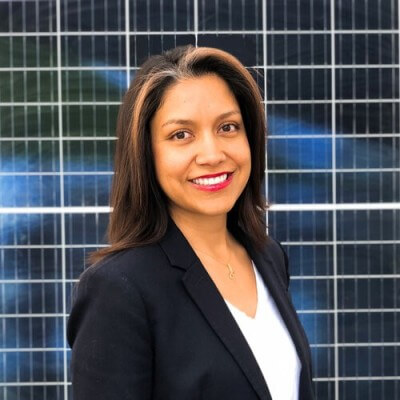
Jennifer Gallegos
Itron
Matthew Mills
PowerFlex (previously The Mobility House)
11:00 - 11:15am
SHARED Refreshment Break
EV Day 2 Closing Session | Salon 4

Chair
Olivia Patterson
E Source
Co-chair
Tami Buhr
E Source
11:15 AM - 12:00 PM
Utility Roundtable

Angie Rodriguez
El Paso Electric
Nikhila Datta
Baltimore Gas and Electric
Jed Cohen
Salt River Project

Anjuli Huelsmann
Ameren Illinois